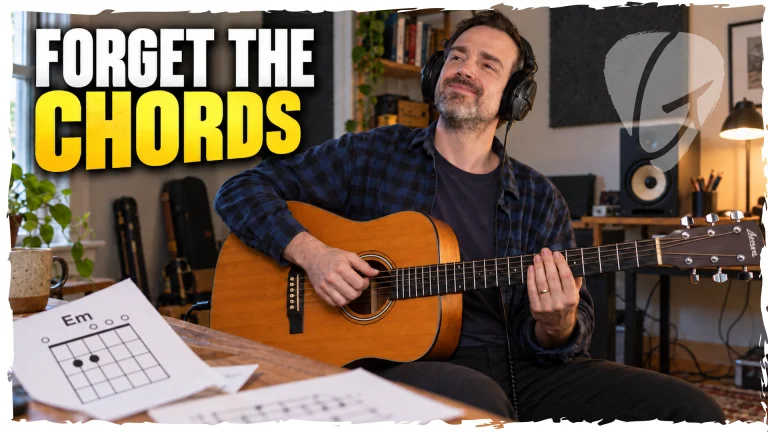
How to Play Guitar for Beginners (Your First Guitar Lesson – Step by Step)
If you’re searching for how to play guitar for beginners, this is the perfect place to start. This first guitar lesson is designed for complete beginners and walks you step by step through the essential basics you need to build a strong foundation.
This first guitar lesson is designed for complete beginners. If you’ve never touched a guitar before — or if you’ve tried in the past and felt overwhelmed — this lesson will walk you through the absolute basics step by step.
What You’ll Learn in This First Guitar Lesson
In this beginner guitar lesson, you’ll learn:
- How to hold the guitar properly
- The names of the guitar strings
- How to tune your guitar
- Basic posture and hand positioning
- How to switch chords smoothly
- Your first simple rhythm pattern
These are the essential fundamentals every guitarist needs.
How to Play Guitar for Beginners: Getting Started on Acoustic Guitar
Many beginners struggle because they skip the fundamentals when learning how to play guitar.
How to hold the guitar
Learning how to play guitar for beginners starts with posture and hand positioning.
The names of the guitar strings
These are known as standard tuning. If you’re curious about how standard tuning developed, you can read more about it here: https://en.wikipedia.org/wiki/Guitar_tunings
How to tune a guitar with a clip on tuner
Do I need to cut my nails to play chords on guitar?
How do I switch chords on guitar smoothly?
Why the Basics Matter When Learning Guitar as a Beginner
Learning guitar as a beginner isn’t about rushing into difficult songs.
It’s about building clean technique, understanding rhythm, and developing coordination between both hands.
If you take your time with these basics, you’ll progress much faster than someone who skips ahead.
This is why this lesson is the foundation for the entire 30-lesson beginner guitar course.
Continue the Full Beginner Guitar Course
If you’re ready to keep going:
👉 Next Lesson: Essential Guitar Basics & Playing Your Very First Song
Or go back to the full structured course here:
👉 Free Beginner Guitar Course (30 Step-By-Step Lessons)

FREE PDF Songbook
Play 15 iconic songs on guitar — starting with just 2 chords
- Play your first complete song today – even as a total beginner
- Build real skills (chord switching, strumming, rhythm) through music you love
- Sound like a real guitarist from your very first practice session